
SAP Business One Review 2026: Features, Pricing, Integrations & Alternatives
What is SAP Business One, and why do so many growing businesses use it to manage their operations? In this guide, we take a closer look at SAP Business One ERP, its core features, and the role it can play in modern ecommerce. You will discover the platform’s main capabilities, integration options, and how to connect your online store with the systems that keep your business running.
SAP Business One can work with different ecommerce platforms, but connecting the two is not always straightforward. Product, customer, order, and inventory data often needs to move between systems automatically and consistently. That is where a well-planned SAP Business One integration becomes essential.
At Firebear, we help businesses connect ecommerce platforms with SAP Business One and automate data exchange between them. If you need help integrating your online store with the ERP, contact us to discuss your integration requirements. But let’sstart from the very beginning.
Table of contents
- What Is SAP Business One?
- SAP Business One Basics: Features, Deployment, and Core Capabilities
- SAP Business One Benefits
- SAP Business One Functionality: Core Modules and Business Processes
- SAP Business One In-Depth Review Articles
- SAP Business One Integrations
- SAP Business One Alternatives: Which ERP Fits Better?
- SAP Business One Pricing
- Final Words: Is SAP Business One Right for Your Business?
- SAP Business One FAQ: Features, Integration, Pricing
What Is SAP Business One?
SAP Business One is an enterprise resource planning (ERP) system designed primarily for small and midsize businesses. It brings core business processes into a single platform, helping companies manage areas such as financials, sales, purchasing, inventory, customer relationships, and reporting from one place.
Unlike a collection of disconnected business tools, SAP Business One is built around a shared source of operational data. This makes it easier to keep information consistent across departments and gives businesses a clearer view of their day-to-day activities. It can also be connected to external systems, including ecommerce platforms, when a company needs its online sales and back-office operations to work together.
The platform is broad enough to support different industries and business models, while its functionality can be extended through integrations and additional solutions. For ecommerce businesses, SAP Business One is particularly interesting as a central system for managing orders, products, inventory, customers, and financial data.
To understand why companies choose it and what it can actually do, let’s take a closer look at the basics of SAP Business One.
SAP Business One Basics: Features, Deployment, and Core Capabilities
In 2026, SAP Business One remains a mature ERP platform rather than a lightweight accounting tool. Its functionality spans a broad range of day-to-day processes, while its integration and extensibility capabilities enable it to connect the ERP with ecommerce platforms, external applications, analytics tools, and other business systems.
SAP Business One Deployment Options
SAP Business One can be deployed on-premises or in the cloud, depending on how a company wants to manage its infrastructure and ERP environment. SAP also provides mobile access, allowing users to work with business information away from the office. The cloud option can reduce the infrastructure burden for companies that do not want to maintain their ERP environment themselves, while an on-premises deployment provides greater direct control over the underlying infrastructure and data.
The choice of deployment is separate from the database technology. SAP currently provides:
- SAP Business One running on Microsoft SQL Server.
- SAP Business One running on the SAP HANA database.
- SAP Business One Cloud, which can run with Microsoft SQL Server or SAP HANA.
SAP Business One Features and Modules
The strength of SAP Business One lies in the breadth of business processes it brings together. Its core functionality includes:
- Financial management — accounting, financial transactions, banking, payments, and financial reporting.
- Sales and customer management — sales opportunities, customer records, quotations, orders, deliveries, invoices, and customer relationship processes.
- Purchasing — supplier management, purchasing documents, goods receipts, and accounts payable processes.
- Inventory management — item master data, stock management, warehouses, inventory movements, and related logistics processes.
- Production and MRP — production management and material requirements planning for businesses that manufacture products.
- Service management — service-related processes and customer support activities.
- Reporting and analytics — business intelligence, reporting, dashboards, and access to operational information for decision-making.
- Business partner management — centralized information about customers, suppliers, and other business partners.
These capabilities are organized into functional areas rather than operating as isolated applications. SAP’s current documentation lists financials, sales, purchasing, business partners, banking, inventory, resources, production, MRP, service, and reporting among the major areas of SAP Business One.
For ecommerce companies, this structure is particularly relevant because an online storefront can generate large volumes of product, customer, order, and inventory data. Connecting that information with the ERP can help create a consistent flow between the customer-facing store and back-office operations.
SAP Business One Web Client and Mobile Access
SAP Business One has also evolved beyond the traditional desktop interface. The SAP Business One Web Client provides access to the core business logic and processes through a browser-based interface. The current Web Client supports both Microsoft SQL Server and SAP HANA environments and uses a user experience based on SAP’s Fiori design approach, with additional capabilities for business data analytics.
Mobile applications extend access further, allowing users to work with business information and analytics while away from their main workstation. SAP’s product line includes mobile applications for Business One, including sales and service applications for iOS and Android.
SAP Business One Extensibility
Integration is another important part of the SAP Business One ecosystem. The ERP provides standard interfaces and extensibility options that allow businesses to connect external applications and build additional functionality around the core system.
One example is the Service Layer, which provides an API-based interface for SAP Business One with OData-based access to business objects and additional capabilities for exposing customized SQL views.
SAP Business One can also be extended through add-ons and partner solutions. This is especially important for businesses whose requirements go beyond the standard ERP functionality — for example, when they need to connect an ecommerce platform, marketplace, specialized warehouse system, or other external application.
For this reason, the basics of SAP Business One go beyond its built-in modules. The platform is better understood as a central business system that can become part of a larger technology stack. We will return to this aspect one more time in the corresponding section below. Now, Let’s explore the core benefits of SAP Business One ERP.
SAP Business One Benefits
The main advantage of SAP Business One is not simply the number of features, but the way they work together around shared business data. For small and midsize companies, this can provide better visibility, more consistent processes, and a stronger foundation for growth. Here are the key SAP Business One benefits to consider:
- Better Business Visibility. SAP Business One gives teams access to information from across the business in one system. Instead of relying on disconnected spreadsheets and applications, managers can work with current operational data when monitoring sales, inventory, purchasing, financials, and other activities. SAP specifically highlights real-time information as a basis for better strategic decision-making.
- Improved Operational Efficiency. By connecting business processes in a single ERP, SAP Business One can reduce repetitive work and the need to maintain the same information in multiple systems. Standardized workflows also make it easier for different departments to work with consistent data.
- Stronger Financial Control. Accounting and financial management are part of the core SAP Business One functionality. Bringing financial transactions together with sales, purchasing, inventory, and other operational data gives businesses a more complete picture of their financial position and helps connect day-to-day activities with financial outcomes.
- Actionable Analytics. Reporting and analytics help users turn operational data into information they can act on. The Web Client includes built-in and customizable analytics, while SAP Business One environments using SAP HANA can provide additional HANA-specific analytical capabilities.
- Better Customer Management. Customer and sales information is connected with the rest of the business rather than kept in isolation. This gives sales and service teams a more complete view of customer relationships and helps them coordinate activities with orders, deliveries, and financial information.
- Flexible Deployment. SAP Business One supports both cloud and on-premises deployment. Cloud deployment can provide access without requiring the company to manage the entire ERP infrastructure itself, while an on-premises installation gives organizations more direct control over their environment.
- Mobile Access. SAP Business One extends business management beyond the office through mobile applications. Users can access relevant business information and, depending on the application and configuration, work with transactions and analytics from mobile devices.
- Broad Integration Capabilities. SAP Business One is designed to work as part of a larger technology environment. SAP provides standard integration capabilities, an Integration Framework for third-party scenarios, and the Service Layer for web-based access to SAP Business One services and objects. This makes integration particularly valuable when an ERP needs to exchange data with ecommerce platforms, external applications, or other business systems.
- Support for Growing Businesses. SAP Business One is specifically designed for small and midsize companies and can be extended as their requirements change. SAP also describes the solution as customizable, allowing businesses to add functionality and adapt the system as they grow.
- One Platform for Core Business Processes. Perhaps the most important benefit is the combination of capabilities in one ERP. Financial management, purchasing, sales, inventory, customer relationships, reporting, production, service, and other processes can operate within the same business environment. This reduces the need to build the entire operational workflow around a collection of unrelated systems.
SAP Business One Functionality: Core Modules and Business Processes
Now, let’s talk about how SAP Business One covers the main processes required to run a small or midsize business. Below is an overview of the most important areas of SAP Business One functionality. However, note that the exact capabilities available can vary by localization, deployment, database platform, and installed extensions.
Financial Management
The Financials module provides the accounting foundation of SAP Business One. It manages the chart of accounts, journal entries, financial postings, budgets, profit centers, and financial reporting. Businesses can also work with multiple currencies and exchange rates, which is particularly useful for companies operating across markets. SAP’s current feature set additionally covers areas such as accounts receivable and payable, cash flow, fixed assets, and financial analysis.
Banking and Payment Management
SAP Business One includes tools for handling everyday banking activities alongside accounting. Companies can manage incoming and outgoing payments, bank transfers, deposits, checks, credit card transactions, and bank reconciliations. Connecting banking activity with the financial records helps reduce manual reconciliation and gives accounting teams a more consistent view of cash movements.
Sales and Accounts Receivable
SAP Business One supports the sales cycle from quotation through order fulfillment and invoicing. Users can create sales quotations and orders, manage deliveries, issue invoices, process returns, and handle related accounts receivable activities. Sales information is connected with inventory and business partner data (see GIF below), so a transaction can affect the relevant operational records without requiring duplicate entry.
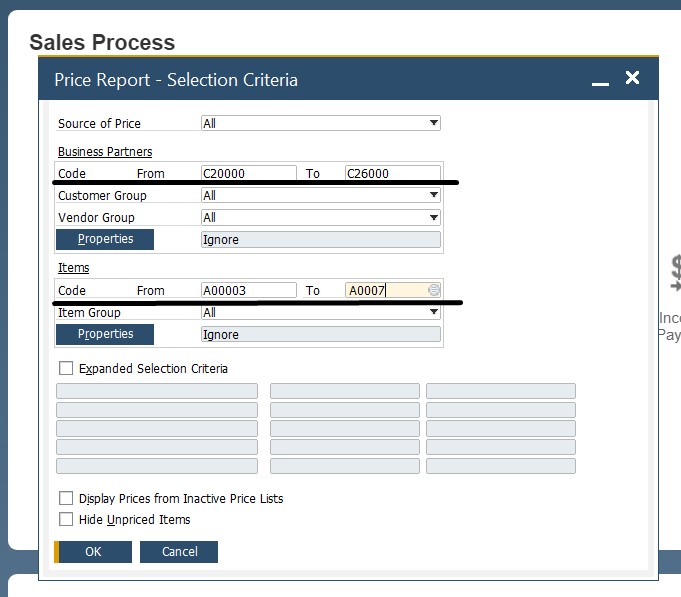
The platform also includes sales opportunities and pipeline management. Sales teams can track opportunities through different stages, analyze forecasts, and monitor won or lost opportunities.
Purchasing and Accounts Payable
The purchasing functionality manages the supplier side of business operations. It covers purchasing opportunities, purchase quotations, purchase orders, goods receipts, supplier invoices, returns, and related payment processes. SAP Business One can also support landed-cost calculations and purchasing in multiple currencies, helping companies maintain a clearer picture of the actual cost of acquired goods.
Because purchasing is connected with inventory and financial management, receiving goods can update stock information while also feeding the corresponding accounting processes.
Inventory and Warehouse Management
Inventory management is one of the central parts of SAP Business One, particularly for retailers, distributors, and manufacturers. The system maintains item master data for products that a company purchases, sells, manufactures, or keeps in inventory. This information can be used across purchasing, sales, production, warehouse management, accounting, and service processes.
The functionality includes warehouse operations, stock transfers, item management, price lists, inventory transactions, and serial and batch number management. Businesses can also configure inventory planning parameters and use availability information to support purchasing and fulfillment decisions.
For ecommerce businesses, this centralized inventory layer is particularly important: an online storefront can rely on the ERP as a source of product and stock information when the two systems are properly integrated.
Customer Relationship Management
SAP Business One combines customer information with sales and service processes through its business partner and CRM functionality. Companies can maintain customer and supplier records, contact details, account information, sales opportunities, and related activities in one environment.
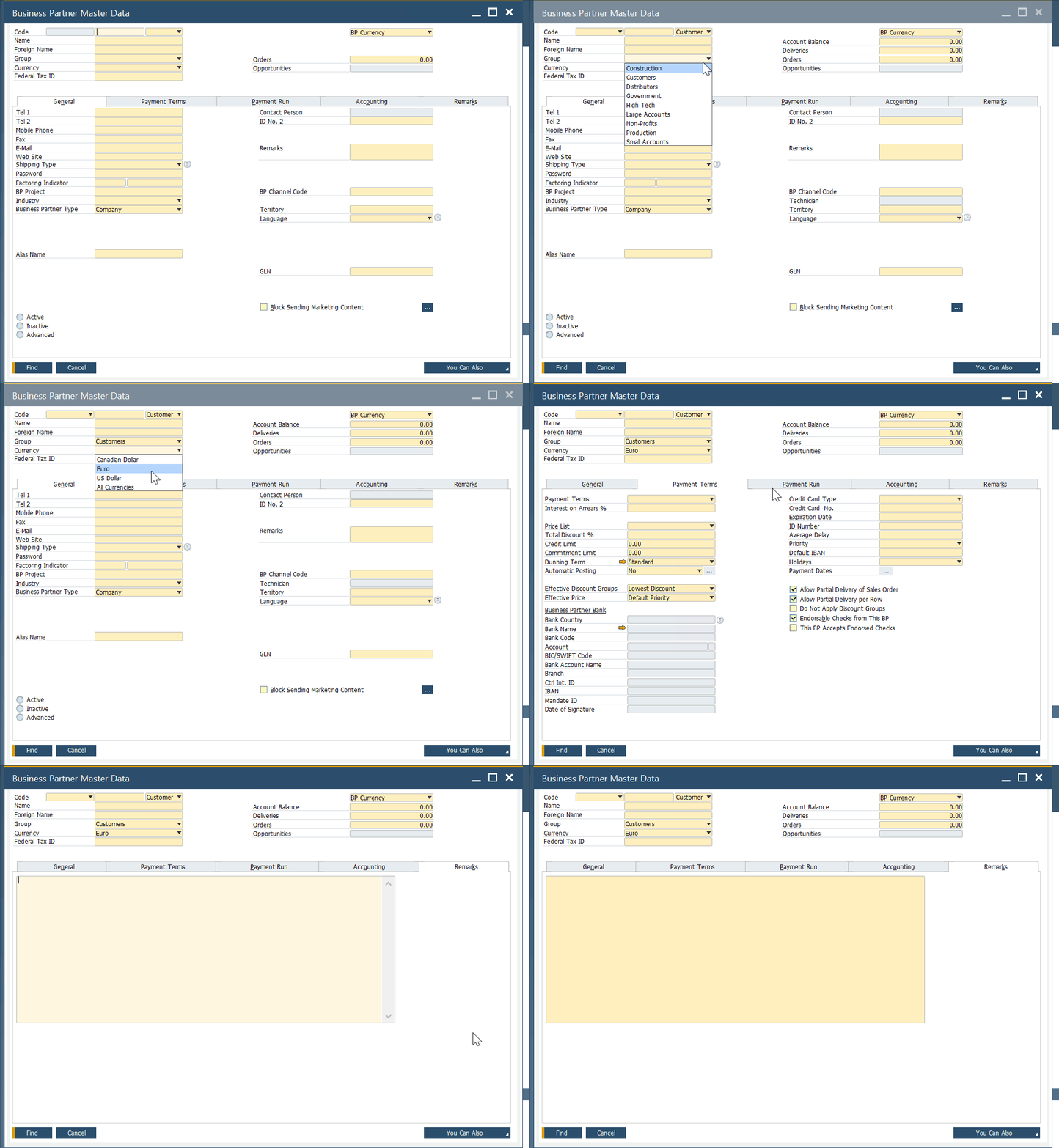
CRM capabilities extend across the customer lifecycle, from initial opportunities and sales activities to service and post-sale interactions. SAP also provides functionality for marketing campaigns and sales analysis, helping businesses connect customer information with commercial activities.
Production and Bill of Materials
For companies that manufacture or assemble products, SAP Business One includes production management and bills of materials (BOMs). Businesses can define the components, quantities, resources, and other information required to produce finished goods, then create production orders and track the manufacturing process.
The Production module can record component consumption, finished-goods receipts, and production costs. Production orders can be created manually or generated from sales and MRP-related recommendations, helping connect manufacturing with actual demand.
Material Requirements Planning (MRP)
The MRP functionality helps manufacturers and other businesses plan what materials they need and when they need them. SAP Business One can evaluate existing inventory together with sales orders, purchase orders, production orders, forecasts, and planning parameters to generate procurement or production recommendations.
The MRP process can take factors such as lead times, minimum order quantities, order multiples, and inventory levels into account. This makes it useful for reducing the risk of material shortages while avoiding unnecessary inventory accumulation.
Service Management
Service functionality is designed for companies that provide customer support, warranties, maintenance, or other after-sales services. Users can manage service contracts, customer equipment and serial numbers, service calls, complaints, inquiries, and related activities.
This creates a connection between customer information and service operations, allowing support teams to work with the relevant customer and product history rather than maintaining a completely separate service database.
Reporting and Business Intelligence
Reporting and analytics turn the operational data stored in SAP Business One into information that managers and employees can use for decision-making. The system includes predefined reports as well as tools for creating customized queries and reports across areas such as finance, accounting, inventory, sales, and purchasing.
The Web Client also provides dashboards, charts, interactive analytics, and predefined KPIs. Businesses using the SAP HANA version can additionally take advantage of HANA-based analytics capabilities. SAP positions real-time information and integrated business intelligence as important parts of the platform’s value proposition.
Resources and Human Resources
SAP Business One also provides functionality beyond the traditional ERP modules. The Resources area can support production-related resource planning, while Human Resources maintains employee information and related records such as contact details and absences. These capabilities help businesses connect people and resources with the operational processes they support.
Administration, Customization, and Extensions
Administration provides the controls needed to configure the SAP Business One environment, including system settings, currencies, authorizations, alerts, and data import/export functions. The platform can also be customized through user-defined fields, tables, queries, and extensions.
This extensibility is important when SAP Business One needs to work with systems outside the ERP. SAP provides tools such as the Service Layer API, SDKs, and extension mechanisms that allow partners and businesses to build integrations and additional functionality.
SAP Business One In-Depth Review Articles
If you are looking for a more in-depth review of SAP Business One, please follow these links to discover more articles dedicated to specific features of the ERP platform:
- SAP Business One Master Data Essentials;(DE)
- SAP Business One Business Partner Master Data;(DE)
- SAP Business One Item Master Data;(DE)
- Creating SAP Business One Documents from Master Data;(DE)
- SAP Business One Navigation & Interface;(DE)
- SAP Business One In-Depth Review: Financial Accounting;(DE)
- SAP Business One In-Depth Review: Sales and Accounts Receivable Documents;(DE)
- SAP Business One In-Depth Review: Purchasing and Accounts Payable Documents;(DE)
- SAP Business One MRP Defined;(DE)
- How to Prepare for an MRP Run in SAP B1;(DE)
- How to Use the Wizard to Execute an MRP Run in SAP Business One;(DE)
- SAP Business One Sales Opportunities;(DE)
- SAP Business One Service Module;(DE)
- How to Create, Authorize, & Approve Documents in SAP Business One;(DE)
- How to Print Documents in SAP Business One;(DE)
- SAP Business One Crystal Reports;(DE)
- SAP Business One Production Module;(DE)
- SAP Business One Inventory (Warehouses, Sublevels, Multi-Bin, Cycle Count, Inventory Tracking, Pick & Pack);(DE)
- SAP Business One Project Management Module;(DE)
- SAP Business One Analytics;(DE)
SAP Business One Integrations
Although SAP B1 offers built-in tools for integration with third-party platforms, they are not enough to cover the entire spectrum of connections a modern business is bound to. Therefore, we offer the opportunity to synchronize your e-commerce website with SAP Business One in the most discreet way. The Firebear team offers various tools that enable SAP Business One integrations with core e-commerce platforms, such as Magento 2 and Shopify. Contact us with specific inquiries regarding the SAP Business One integration with your online business.
Also, check our Magento 2 SAP Business One Integration tool:
SAP Business One Integrations with other systems
- SAP Business One Integration with Amazon Seller Central(DE)
- SAP Business One Integration with eBay(DE)
- SAP Business One Integration with Walmart Seller Central(DE)
- SAP Business One Integration with Zoho CRM(DE)
- SAP Business One Integration with Pipedrive CRM(DE)
- Sap Business One Integration with Zen Cart(DE)
- Sap Business One Integration with Shopify(DE)
- SAP Business One Integration with Pipedrive CRM
- SAP Business One Integration with PrestaShop(DE)
- SAP Business One Integration with SugarCRM(DE)
- SAP Business One Integration with Hubspot CRM(DE)
- SAP Business One Integration with Microsoft Dynamics 365(DE)
- SAP Business One Integration with Zoho Books(DE)
- SAP Business One Integration with BigCommerce(DE)
- SAP Business One Integration with WooCommerce(DE)
- SAP Business One Integration with 3DCart(DE)
- SAP Business One Integration with OpenCart(DE)
- SAP Business One Integration with Shopping Cart Elite(DE)
- SAP Business One Integration with OroCommerce(DE)
- SAP Business One Integration with Zoho Commerce(DE)
- SAP Business One Integration with Swell Commerce(DE)
- SAP Business One Integration with ShipWorks(DE)
- SAP Business One Integration with ShipStation(DE)
- SAP Business One Integration with Starshipit(DE)
- SAP Business One Integration with Lightspeed(DE)
SAP Business One Alternatives: Which ERP Fits Better?
Now, let’s say a few words about SAP Business One alternatives. While it is a capable ERP for small and midsize companies, SAP B1 is not the right choice for every business. However, the best SAP Business One alternative depends on what you value most: technical flexibility, AI capabilities, enterprise functionality, ecommerce support, or predictable costs.
Below are four alternatives worth considering in 2026. Rather than naming one universal winner, we focus on the situations in which each platform can make more sense than SAP Business One.
More Tech-Savvy and Flexible Alternative: Odoo
Odoo is a strong alternative for businesses that want an ERP they can customize extensively and adapt to their own workflows. Its open-source foundation and modular architecture make it particularly attractive to technically capable teams that do not want to be limited by a traditional ERP structure.
Odoo combines applications for accounting, CRM, inventory, manufacturing, sales, ecommerce, POS, projects, HR, and other business processes in one platform. It can be deployed through Odoo Online, Odoo.sh, or on premises, with external API access available on the Custom plan.
For ecommerce companies, Odoo is especially interesting because ecommerce is part of the product itself, rather than something that necessarily has to be connected through a separate integration. This makes it worth considering if you want to build more of your commerce and back-office stack around one flexible platform.
Choose Odoo if: technical flexibility, customization, open-source technology, and an integrated ecommerce stack matter more to you than the established SAP ecosystem.
More AI-Friendly Alternative: Microsoft Dynamics 365 Business Central
If AI is becoming a major part of your ERP strategy, Microsoft Dynamics 365 Business Central deserves attention. Its strongest advantage is its position inside the broader Microsoft ecosystem, including Microsoft’s Copilot and agent capabilities.
Business Central is increasingly incorporating AI-assisted functionality into everyday ERP workflows. Microsoft documents Copilot and agent capabilities for tasks such as retrieving information, handling sales orders, and working with payables, while some newer agent functionality uses consumption-based billing.
This makes Business Central particularly compelling for companies already invested in Microsoft 365, Azure, Power Platform, or other Microsoft business technologies. Instead of treating AI as an external add-on, businesses can build it into a broader Microsoft-centered technology environment.
Choose Business Central if: AI-assisted workflows, Microsoft integrations, cloud services, and an ecosystem built around automation are high priorities.
More Feature-Rich Enterprise-Grade Alternative: Oracle NetSuite
For companies that have outgrown the scope of a smaller-business ERP and need a broader enterprise platform, Oracle NetSuite is one of the most established SAP Business One alternatives.
NetSuite is a cloud ERP designed to bring financial management, CRM, ecommerce, inventory, procurement, professional services, and other business processes together. It is particularly relevant for organizations dealing with more complex structures, multiple subsidiaries, international operations, and ambitious growth plans.
The trade-off is complexity. NetSuite can require a more substantial implementation and investment than an ERP aimed primarily at small and midsize businesses. It therefore makes the most sense when the additional functionality and scalability justify that investment.
Choose NetSuite if: your business needs broader enterprise functionality, complex financial structures, international operations, or a platform designed to support substantial organizational growth.
More Affordable Alternative: Acumatica
If the main reason for looking beyond SAP Business One is the cost structure, Acumatica is worth evaluating. It takes a different approach to licensing: rather than charging primarily by the number of users, Acumatica bases pricing on the applications required, business usage and resources, and deployment preferences. Its current model provides unlimited users, although the final subscription price is tailored to the individual implementation.
That model can become particularly attractive for businesses with many employees who need ERP access. Acumatica also covers financials, inventory, order management, CRM, manufacturing, retail, and ecommerce scenarios. Its retail offering includes connectors for platforms such as Shopify and BigCommerce.
Calling Acumatica simply “cheaper” would be misleading because ERP costs depend heavily on implementation, modules, transaction volumes, hosting, and services. Its advantage is a different and potentially more predictable licensing model, especially for organizations with many users.
Choose Acumatica if: you want a modern cloud ERP with broad functionality and unlimited-user licensing rather than a traditional per-user pricing structure.
SAP Business One Pricing
SAP Business One pricing depends on the license type, deployment model, number of users, and implementation requirements. As a general 2026 benchmark, cloud subscriptions cost about $90–$250 per user per month, while perpetual licenses range from roughly $1,500–$5,500 per user. Implementation can add $10,000+ depending on the project.
| License / Cost | Cloud | Perpetual | What It Includes |
| Starter Package | $38–$45/user/month | $1,200–$2,400 upfront | Restricted functionality; up to 5 users |
| Limited User | $47–$100/user/month | $1,500–$1,850 upfront | Access focused on Finance, Logistics, or CRM |
| Professional User | $91–$219/user/month | $2,700–$5,500 upfront | Full access to SAP Business One modules and SDK |
| Implementation | — | $10,000–$50,000+ | Consulting, configuration, data migration, customization, and training |
| On-premise maintenance | — | 18–22% annually | Annual support and maintenance based on license cost |
| Hosting/infrastructure | Varies | Additional | Cloud hosting or on-premise servers and infrastructure |
Note that these figures are indicative rather than fixed SAP list prices. Actual quotes vary by country, SAP partner, contract, deployment model, modules, and customization requirements. For ecommerce businesses, integration with platforms such as Magento, Shopify, or BigCommerce can also add to the overall project cost.
Final Words: Is SAP Business One Right for Your Business?
SAP Business One remains a solid ERP for small and midsize businesses that need to bring financials, sales, purchasing, inventory, CRM, manufacturing, service, and reporting into one connected environment. Its broad functionality, flexible deployment options, analytics, and integration capabilities make it suitable for companies that have outgrown disconnected business tools and need a more structured way to manage their operations.
At the same time, SAP Business One is not automatically the best choice for every company. Your decision should depend on the complexity of your processes, required features, budget, deployment preferences, and the other systems in your technology stack. For ecommerce businesses, one of the most important considerations is how easily the ERP can exchange data with your online store.
A reliable SAP Business One integration can connect your ERP with platforms such as Magento, Shopify, or BigCommerce and automate the flow of products, customers, orders, inventory, prices, and other essential data. Instead of maintaining information manually in multiple systems, you can create a more consistent connection between ecommerce operations and your back office.
If you are planning SAP Business One ecommerce integration or need to connect SAP B1 with Magento, Shopify, BigCommerce, or another ecommerce platform, Firebear can help you design and implement the integration. Contact Firebear to discuss your SAP Business One integration requirements and find the right approach for your business.
SAP Business One FAQ: Features, Integration, Pricing
What is SAP Business One?
SAP Business One is an ERP system designed primarily for small and midsize businesses. It combines financial management, sales, purchasing, inventory, CRM, production, service, reporting, and other core business processes in one system.
What are the main SAP Business One features?
Key SAP Business One features include financial management, sales and purchasing, inventory and warehouse management, CRM, production and MRP, service management, banking, reporting and analytics, and integration capabilities. The available functionality can vary depending on the deployment, localization, and installed extensions.
Is SAP Business One an ERP system?
Yes. SAP Business One is an ERP platform that connects different areas of business operations through shared data. It is intended to provide small and midsize companies with a centralized system for managing their financial, commercial, operational, and customer-related processes.
Can SAP Business One integrate with ecommerce platforms?
Yes. SAP Business One can be integrated with ecommerce platforms and other external applications through available integration technologies, APIs, partner solutions, and connectors. An ecommerce integration can synchronize data such as products, customers, orders, inventory, and prices between the storefront and ERP.
What is SAP Business One ecommerce integration?
SAP Business One ecommerce integration connects the ERP with an online store so that business data can move between the two systems automatically. Depending on the integration, this can include product information, stock levels, customer records, orders, prices, and fulfillment information.
Can I connect Magento with SAP Business One?
Yes. A Magento SAP Business One integration can connect a Magento storefront with the ERP and automate data exchange between them. The exact workflow depends on business requirements, but common scenarios include synchronizing products, customers, orders, inventory, and pricing.
Can SAP Business One integrate with Shopify and BigCommerce?
Yes. Shopify and BigCommerce can be connected with SAP Business One using appropriate integration solutions. A Shopify SAP Business One integration or SAP Business One BigCommerce integration can help synchronize ecommerce data with ERP processes and reduce manual data entry.
How much does SAP Business One cost?
SAP Business One pricing depends on the license type, number of users, deployment model, and implementation requirements. As a general 2026 benchmark, cloud licenses can cost roughly $90–$250 per user per month, while perpetual licenses can range from about $1,500 to $5,500 per user. Implementation, customization, integration, and support can add substantially to the total cost.
What are the best SAP Business One alternatives?
The best SAP Business One alternative depends on your priorities. Odoo can be attractive for technical flexibility and customization, Microsoft Dynamics 365 Business Central for its Microsoft and AI ecosystem, Oracle NetSuite for broader enterprise requirements, and Acumatica for its flexible licensing model. The right choice depends on functionality, budget, integrations, and business size.
Is SAP Business One a good ERP for ecommerce businesses?
SAP Business One can be a good choice for ecommerce businesses that need a centralized ERP for financials, inventory, purchasing, sales, customers, and other back-office processes. Its value depends heavily on how well it integrates with the ecommerce platform. A properly designed integration can connect the storefront and ERP while reducing duplicate work and keeping important business data synchronized.
Related posts
 Shopify Product Import Behavior Explained: Take Full Control of Your Product Data
 SaleHoo Dropshipping Review 2026: Is SaleHoo Worth It for Your Shopify Store?
 What’s Wrong with Shopify App Store: How to Spot a Scam or Low-Quality App in 2026
 Export Products from Magento 1 to Magento 2 Easily: Full Migration Tutorial for 2026
 Shopify vs. Etsy Fees Comparison: Which Platform Maximizes Your Profits in 2026?
 How to Import Orders into Shopify: Best Tools and Methods in 2026
 How to Import Shopify Product Variants by EAN
 How to Control File Names for FTP/SFTP Exports in Shopware 6