"Shopify"

What Is MOQ? Your Guide to Minimum Order Quantities Across Major E-Commerce Platforms

- E-Commerce, Magento 2, Shopify, Shopware

MOQ meaning

Running an online store is like navigating a never-ending puzzle. Every day, you juggle fluctuating customer demands, storage limitations, and production costs. One wrong move, and you’re stuck with either too much inventory or not enough to meet demand. That’s where a strategic tool like MOQ (minimum order quantity) comes into play.

Imagine this: you’re a clothing retailer ordering t-shirts from a supplier. You’d love to order just enough to meet a short-term sale, but the supplier requires you to buy a minimum of 500 units. That’s your MOQ — the smallest number of units a supplier is willing to sell. While it may seem like an extra complication, MOQs are actually a crucial part of managing both sides of the supply chain, ensuring neither party takes on unnecessary risk.

MOQ meaning isn’t just about the supplier’s convenience. It’s a survival tool for e-commerce businesses. By setting a minimum order quantity, companies can avoid the pitfalls of high storage costs, low profitability, and inefficient production runs. It’s all about balance. While you want to offer your customers flexibility, you also need to ensure that your business stays profitable.

In today’s e-commerce landscape, understanding what is MOQ is becoming more important than ever. For merchants selling everything from handmade goods to electronics, MOQs are a key strategy in inventory management. They help streamline operations, optimize stock, and maintain profitability. Whether you’re just starting or looking to scale, what does MOQ mean for your business? Let’s find out. Continue Reading


How to Create Perfect Meet the Team Page: 10 Expert Tips & Examples

- E-Commerce, Magento 2, Shopify, Shopware

meet our team cover

Creating the perfect “Meet the Team” page is essential for businesses looking to showcase their team members while building trust and transparency with their audience. This page does not just introduce the faces behind your brand. It provides an opportunity to humanize your business, creating a connection between your visitors and the people who make everything happen.

In this guide, we’ll walk you through the process of creating an engaging and visually appealing page to introduce the team behind your business. You will learn what exactly a “Meet Our Team” page is, including its purpose and why it’s so crucial for any website.

Then, we’ll dive into 10 actionable tips, complete with examples, to help you create a standout page. From selecting unique design elements to writing engaging bios, we cover all aspects of making this page an effective tool for your business.

Finally, we’ll explore the advantages of a well-designed team page and highlight the pitfalls of poorly executed ones. By the end, you’ll be equipped with everything you need to build a page introducing your team that leaves a lasting impression. Continue Reading

Magento vs Shopify: Key Highlights on Product, Inventory, Marketing & Order Management Features

- E-Commerce, Magento 2, Shopify

Comparing Magento vs Shopify

Welcome to the only Magento vs Shopify comparison you need to understand what platform works best for your business. In the world of eCommerce, choosing between Magento and Shopify is often a matter of scale, customization, and ease of use. Both platforms are highly popular but cater to different types of businesses.

Magento is an open-source platform designed for flexibility and scalability. It allows for deep customization, making it ideal for large enterprises or businesses with specific needs. However, this comes with complexity — it requires a development team and technical knowledge to manage effectively.

Shopify, on the other hand, is a fully hosted solution known for its simplicity and ease of use. It allows businesses of all sizes to launch a store quickly, without technical expertise. Shopify is perfect for small to medium-sized businesses looking for a streamlined setup process with minimal configuration.

In this Magento vs Shopify comparison, we’ll look at product management, inventory management, marketing, and order management to help you decide which platform suits your business needs. Continue Reading

Shopify Capital Guide: How to Secure Funding for Your Business

- Shopify

Shopify Capital Review

Are you a Shopify merchant willing to secure funding for your e-commerce business? This Shopify Capital guide will help you!

Below, you will learn everything about the program. We start with what Shopify Capital is, moving to the first loan application.

The platform’s funding program has many advantages. It offers flexible conditions for merchants, reducing paperwork. It is also worth mentioning that Capital relies on your daily sales for repayments.

Whether you’re starting your e-commerce business or looking to scale, this guide is for you! It will show you how Shopify Capital can elevate your business to the next level.

Learn valuable tips on how to maximize your funding opportunities. Discover a balanced evaluation of the program’s pros and cons. By the end, you’ll know how Shopify Capital can support your business’s financial needs.

Keep reading to uncover whether this funding program is the right fit for you.

Continue Reading

Shopify Product Mapping Guide

- Our extensions, Shopify

Shopify Product Mapping guide

Welcome to our guide to Shopify product mapping. Since the platform has no built-in mapping instruments, you must rely on additional tools to match product attributes for different data exchange purposes. All core Shopify product metafields, for instance, are mapped automatically if you use Marketplace Connect. Some marketplaces, however, require certain product attributes to be displayed on your listings that aren’t part of your product details in the Shopify admin by default. How to align your product mapping efforts on Shopify with your integration strategies most efficiently? Let’s see!

The following article teaches how to map products on Shopify without headaches. We explain how to create a Shopify product mapping scheme and use it for integrations with various external systems, including marketplaces, ERPs, CRMs, etc., with the help of the Import & Export Tool for Shopify. Below, you will learn how to create flexible schemes for both import and export, automating all further data synchronization. Also, there is a table that contains all product attributes and their descriptions. You will need this information for mapping third-party column titles.  Continue Reading

Advanced Shopify Import: Gift Cards

- Our extensions, Shopify

Shopify import gift cards explained

In the following article, you will master the Shopify import of gift cards. First, we explain how to transfer gift card products to your e-commerce website. If you need to move multiple gift cards to your storefront, consider a bulk transfer a suitable option. You will mass import gift cards to Shopify within just a few clicks.

After that, we focus on another aspect – the transfer of actual Shopify gift cards. What’s the difference between a gift card and a gift card product? You will also find the answer below. So, let’s go get Shopify gift cards imported. Continue Reading

Discovering Shopify Shop Chat: Your Ultimate Tutorial to Customer Help on Your Website

- Shopify

shopify shop chat: customer service chat for your store visitors

Since communication with customers is crucial for every business, it’s essential to choose tools that are easy to use and allow your shoppers to contact you effortlessly. Shopify excels in this area with its built-in Shop Chat feature, which you can activate without needing any third-party apps. The following article sheds light on the Shopify customer support chat, which is the best way for you and your customers to interact.

You will learn what Shopify Shop Chat is and how your customers can use it. After that, we explain how to manage your support chat visibility and teach you how to reply to customer messages using this handy instrument. Note that the platform offers a system of instant responses so that you can partly automate your client support. We also focus on this aspect below. Continue Reading

Shopify FTP Upload: How to Sync Data From FTP to Shopify

- Our extensions, Shopify

Shopify FTP

Today, we’ll delve into the process of importing files into your Shopify store using FTP (File Transfer Protocol). This approach allows you to seamlessly transfer data from a remote server, providing a more efficient alternative to manual file uploads. To streamline your update procedures, Shopify FTP import offers a superior solution. To achieve this, you’ll require the Firebear Import & Export Tool, which will supersede the standard Shopify data transfer method and unlock previously unavailable features.

In the forthcoming guide, you will learn how to send FTP files to Shopify. We explain what FTP is, briefly describe the standard Shopify import, and then proceed to the Shopify FTP upload, including its benefits and implementation. Be sure to explore our Shopify Cookbook for additional valuable insights and tips to enhance your Shopify experience. Continue Reading

How to Export Shopify Products to Etsy

- Our extensions, Shopify

how to export shopify products to Etsy

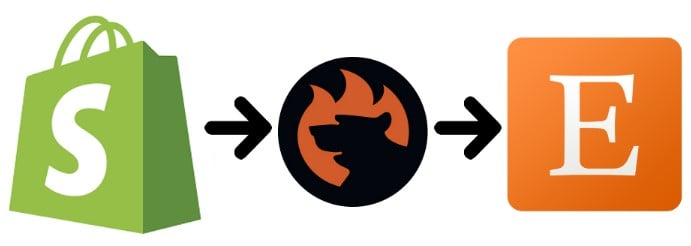
The following article explains how to export Shopify products to Etsy. While both systems offer import and export instruments that support basic data transfers, it is still impossible to establish a direct connection between them. We, however, know a hassle-free approach to the Shopify Etsy integration. Below, you will learn how to sync product data between Shopify and Etsy in just a few clicks. 

First of all, you need to export products from Shopify. We use the Import & Export Tool because it not only creates a file with your product feed in multiple formats suitable for third parties but also lets you automate the mapping of Shopify product data to Etsy listing fields. 

Next, we focus on the import side of the Etsy Shopify integration. While it is true that Etsy does not allow spreadsheet bulk imports via admin, we use Easy Listing Uploader to provide the update. Let’s describe each part of the integration in more detail to master the export of Shopify products to Etsy. If you are not sure what platform to choose, check our Shopify vs. Etsy Fees comparison.  Continue Reading

How to Export Orders from Shopify Automatically

- Our extensions, Shopify

shopify export orders automatically

Welcome to our guide to Shopify order export automation. Below, we briefly explain the platform’s default order export routine and then proceed to a more advanced approach that adds automation, mapping, and other benefits absent in default data transfers. 

Automating the export of order data from Shopify can improve your daily duties and enhance the efficiency and accuracy of your order management efforts. Eliminating the need for manual data entry will help you save time and reduce human error. At the same time, scheduled export processes will provide all the connected systems with near-real-time updates.

In this article, you will learn how to export orders automatically in Shopify. Furthermore, we explain how to export the latest orders, transfer your information straight to a receiving party, and modify order data when you transfer it from your store. These features will help you seamlessly integrate your e-commerce website with ERP, accounting, shipping, and fulfillment systems, streamlining the entire order fulfillment cycle.

Can Shopify export orders automatically? Let’s look at the default order export to find the answer.  Continue Reading