"Magento 2"

Mastering Magento 2 Cart Price Rules: Your Step-by-Step Guide to Shopping Cart Discount Management, Import & Export
- E-Commerce, Magento 2

Illustrative image for the Magento 2 Cart Price Rules guide with emojis, magento logo, and text on orange background

Managing discounts effectively is essential to driving more sales and keeping your customers coming back. And Magento 2 cart price rules offer a powerful way to create flexible promotions directly in your admin panel — from percentage discounts to free shipping incentives.

In this comprehensive guide, we’ll walk you through everything you need to know about Magento 2 cart price rules. You’ll learn what shopping cart price rules are, how they differ from catalog price rules, and why they’re such a valuable tool for any Magento store owner.

We’ll cover step-by-step instructions for creating and managing cart price rules in Magento 2, including tips to avoid common pitfalls and ensure your promotions run smoothly.

Additionally, you’ll discover how to import Magento 2 cart price rules quickly using the Improved Import & Export extension. We’ll show you how to prepare your data, what attributes are required, and how to automate imports to save time.

Whether you’re new to Magento cart price rules or looking to streamline your workflow, this article will give you the knowledge and tools to set up effective promotions and grow your store’s revenue.

Continue Reading

Magento CMS Explained: How to Manage, Import & Export Magento 2 CMS Pages Like a Pro

- E-Commerce, Magento 2

Illustrative image for the Magento 2 CMS Import & Export Guide with emojis, magento logo, and text on orange background

If you’re looking to build a visually appealing and content-rich storefront in Magento 2, understanding how the Magento CMS works is essential. Magento 2 CMS pages power everything from your homepage and landing pages to promotional banners, legal disclaimers, and “Meet the Team” — all without writing a single line of code. Whether you’re designing static pages or building dynamic layouts with Magento 2 Page Builder, CMS pages give you full control over your store’s content and presentation.

In this guide, we’ll break down exactly what Magento 2 CMS pages are, how to create and manage them effectively, and — most importantly — how to import and export CMS pages in Magento 2 using the most reliable method. With the help of the Improved Import & Export extension, you can move beyond the limitations of the native Magento backend and automate your entire CMS workflow. From bulk migration to multistore setups, we’ll show you how to simplify CMS import export for Magento 2 like a pro.

Ready to master Magento CMS? Let’s dive in.

Continue Reading

Magento 2 Configurable Product Import: Complete Guide with Sample CSV

- E-Commerce, Magento 2

Illustrative image for the Magento 2 Configurable Product Import Guide with emojis, magento logo, and text on orange background

Importing a single product into Magento 2 is fairly straightforward using the built-in tools under System → Import. But when it comes to Magento 2 configurable product import, things get much more complex. Migrating configurable product data — especially when it includes multiple associated simple products and custom attributes — can quickly become overwhelming if you’re moving from an old Magento installation or another platform entirely.

The good news? With the right approach and correctly structured CSV files, importing configurable products into Magento 2 is not only possible but entirely manageable. In this guide, we’ll walk you through everything you need to know to import configurable products in Magento 2, including how to prepare your data, avoid common pitfalls, and speed up the process using the Improved Import & Export extension.

We’ll also provide a downloadable Magento 2 configurable products sample CSV, explain key differences from importing via the default solution, and highlight how to fix issues when variations don’t appear as expected. Whether you’re dealing with a catalog of 10 or 10,000 items, this tutorial is your starting point. Continue Reading

Magento 2 Advanced Pricing Import Guide: Tier, Group & Special Prices Explained

- E-Commerce, Magento 2

Illustrative image for the Magento 2 Advanced Pricing Import Guide with emojis, magento logo, and text on orange background

Magento 2 advanced pricing import is a powerful way to manage tier prices, special offers, group-specific discounts, and Minimum Advertised Price (MAP) across your catalog — but doing it manually or using the default import tool can be frustrating and time-consuming. In this guide, we’ll walk you through everything you need to know about importing advanced pricing in Magento 2.

You’ll learn how Magento handles Special Price, Group Price, Tier Price, and MAP pricing — and how to format your CSV files correctly. We’ll also show you where to get a sample Magento 2 advanced pricing CSV and explain each required attribute for a successful import.

More importantly, we’ll compare two approaches to importing advanced prices. First, using Magento 2’s built-in import feature, where advanced pricing must be uploaded separately from product data. Then, we’ll show you a better way — importing all product and pricing information together using the Improved Import & Export extension by Firebear.

If you’ve ever struggled with Magento’s limited import tools or dealt with mismatched spreadsheets, this tutorial will help you streamline your bulk pricing updates and save time while improving accuracy.

Continue Reading

Magento 2 Export Customers Tutorial: Export Customer Data with Ease

Illustrative image for the Magento 2 export customers tutorial with emojis, magento logo, and text on orange background

Magento 2 export of customers is a core task for any store owner or administrator. Whether you’re migrating to another platform, syncing with external CRMs, or creating backups, the ability to export customers in Magento 2 efficiently and accurately is essential. Just like in the case of Magento’s customer import, the platform’s default export tools have limitations that can slow you down or lead to incomplete data. That’s why understanding your options — and knowing how to optimize them — is so important.

In this article, we’ll walk you through why exporting customer data matters, how to do it using the default Magento 2 tools, and how to take your exports to the next level with the Firebear Improved Import & Export extension. We’ll also compare native functionality with Firebear’s advanced features, so you can decide which Magento 2 customer export method works best for your store, whether you’re a technical user or a non-coder looking for simplicity and automation. Continue Reading

Magento 2 Swatch Image Guide: How to Create, Manage & Import Color Swatches

- E-Commerce, Magento 2

cover image for the Magento 2 Swatch Image Guide with color and text swatches for a category page with pants

Magento 2 swatch image functionality is crucial in creating a visually engaging shopping experience, especially for configurable products. Whether you’re showcasing different colors, textures, or patterns, Magento 2 swatches allow you to present product variations in an intuitive, customer-friendly way. However, many merchants struggle with managing and importing these swatches effectively, which can lead to poor product presentation and missed sales opportunities.

In this guide, we’ll walk you through everything you need to know about Magento swatches — including how to create color swatches, configure swatch image sizes, retrieve swatch image URLs, and most importantly, how to import Magento 2 swatch images using a streamlined, automated process. You will learn how to prepare your CSV files, map the necessary attributes, and avoid common pitfalls that come with importing swatches.

By the end of this article, you’ll be able to manage and import Magento swatches like a pro, giving your storefront the visual polish it deserves.

Continue Reading

Magento 2 Product Position in Category: Import, Export & Visual Sorting Explained

- E-Commerce, Magento 2

Illustrative image for the magento 2 product position in category guide with emojis, magento logo, and text on orange background

Today, we’d like to introduce you to the Magento 2 product positions in categories. You will learn what a product position in a category means and how to import this data to Magento 2. Unfortunately, the default Magento 2 import and export tools don’t offer a way to manage this information, forcing you to manually reorder items within each category, which can be time-consuming and error-prone, especially with large catalogs.

That’s where the Improved Import & Export extension steps in. It solves this limitation by letting you import and export product positions across categories using familiar file formats like CSV, XML, XLSX, ODS, and JSON. With just a few steps, you can automate visual merchandising tasks and keep your store’s product display in perfect order.

In this guide, you’ll learn exactly what product position in a Magento 2 category means, how the categories_position attribute works, and how to seamlessly import or export product sorting data. We’ll also highlight the advantages of using Firebear’s Improved Import & Export extension to make this process smooth, scalable, and fully customizable.

Let’s begin by exploring the concept of the Magento 2 product position in category and why it matters for your business.

Continue Reading

Magento 2 Downloadable Product Guide: Complete Setup and Import Explained

screenshot of a magento 2 downloadable product page with LifeLong Fitness IV - video instructions, routines, and exercises

Looking to sell digital goods like eBooks, music, software, or licenses? Then understanding the Magento 2 downloadable product is a must. This guide dives deep into everything you need to know about this powerful product type in Magento 2 — from its definition and setup to storefront behavior and automated import processes.

You’ll learn what a downloadable product in Magento 2 is, how it compares to virtual products and other product types, and how to configure it with downloadable links and samples. We’ll also walk you through creating and managing Magento downloadable products step-by-step — no technical background needed. Plus, we’ll show you how to import Magento 2 downloadable products efficiently using CSV files and enhanced import tools.

Whether you’re launching your first digital product or optimizing a complex catalog, this comprehensive guide will help you make the most of Magento 2 downloadable products. Let’s get started.

Continue Reading

Virtual Product in Magento 2: Complete Guide to Setup, Shipping & Import

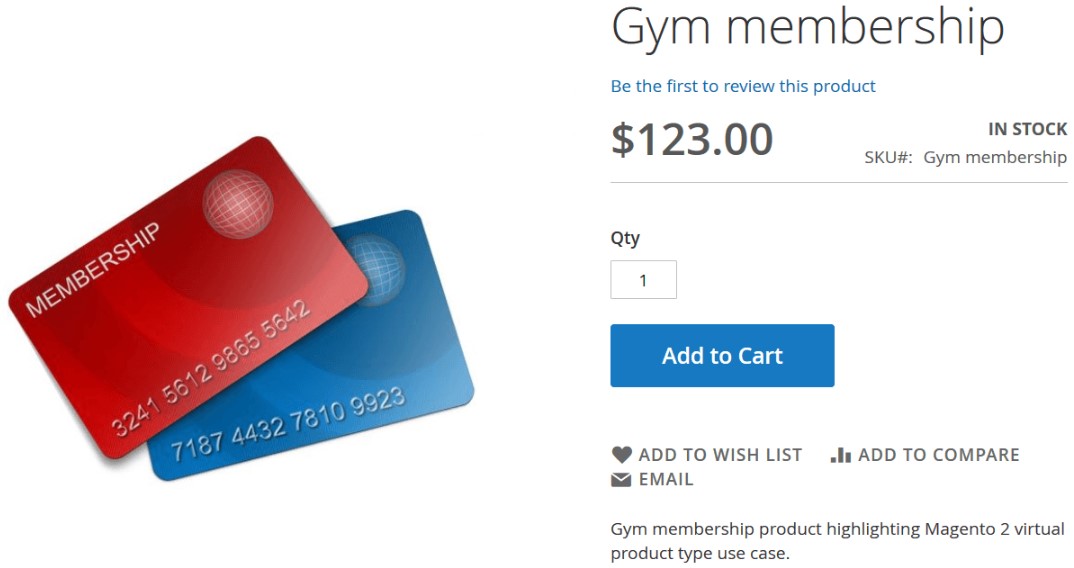
screenshot of a virtual product page on a magento 2 website

In the ever-evolving world of e-commerce, not every product needs a box, a barcode, or a shipping label. Some of the most powerful offerings — think services, subscriptions, or warranties — exist purely in digital form. That’s where the virtual product in Magento 2 comes into play.

Unlike physical or downloadable products, Magento 2 virtual products don’t require shipping, packaging, or even a download link. They’re weightless, dimensionless, and ideal for selling non-tangible goods like online consultations, extended warranties, or memberships. Whether you’re running a service-based business or offering add-ons to physical items, virtual products are an essential part of the Magento 2 ecosystem.

In this comprehensive guide, we’ll walk you through everything you need to know about working with Magento virtual products. You’ll learn what a virtual product is, how to set it up, and how it behaves on the storefront. We’ll also show you how to import and export virtual products in Magento 2 using CSV files, helping you scale faster and manage your catalog more efficiently.
Continue Reading

How to Run Magento 2 Import if Required Columns Are Missing

Magento 2 Import without Required Columns

Welcome to our guide on how to import data to Magento 2 if something is missing in a table. Below, we shed light on a very important aspect of every import process – columns (attributes) of an import file. What if your data table doesn’t contain one? By default, you face the inability to transfer the update to your Magento 2 website. Many different entities can be transferred into Magento 2, so you have to deal with various data depending on your particular business case. However, the absence of the smallest detail can ruin all your data transfer efforts. Especially if you use the default data transfer solutions. 

Luckily, we know how to prevent such issues. Meet the Improved Import & Export Magento 2 extension. With the help of this plugin, you can import data to Magento 2 if some required columns are missed. The following article describes this process. You can either manually add the necessary columns or automate the missed data addition using the module’s functionality. Besides, you will discover the required CSV file structure as well as core features of the Improved Import & Export Magento 2 extension
Continue Reading