The Best Java Frameworks

Below, we describe the best Java Frameworks which can significantly improve your development. Spring MVC, JSF, Vaadin, and other useful tools are mentioned in the following blog post.

Below, we describe the best Java Frameworks which can significantly improve your development. Spring MVC, JSF, Vaadin, and other useful tools are mentioned in the following blog post.

We’ve recently described the best JavaScript package managers, and this blog post is its continuation. Therefore, below you will find the best packages for npm and Bower. Some of them are already mentioned in the previous post, while we’ve also tried to dig something new. If you are not familiar with package managers, let’s start our journey into the world of Bower and npm packages with a short description. Continue Reading

During past years, web development has been constantly moving into the cloud. This tendency brought a lot of new tools and platforms as well as simplified the creation of web apps. The only thing that a modern web developer needs is a browser – a thin client that allows to get an access to a variety of cloud applications and services. At the same time, it is also a source of different learning materials: books, videos, tutorials, online classes, etc. Continue Reading

The appearance of package managers entirely changed JavaScript routine processes, since they’ve solved a set of problems and simplified the use of the language. First of all, JavaScript package managers introduced a new reliable approach to third-party software. That’s why you only need to know how a certain tool works instead of learning the algorithm of the installation process, or how the software is built, compiled, and integrates with the system. Besides, you get a dependency management solution with every JavaScript package manager. The software knows the requirements of every package, so it automatically installs all the necessary components in order to satisfy the tree of dependencies. Continue Reading

Below, I shed light on such useful technology as and compare it with the closest competitors. Since here on the Firebear blog we are passionate about Magento 2, I also explain how to configure and adjust RequireJS with the second version of the ecommerce platform. The article itself combines real world coding experience, notes from the official documentation, code snippets, and materials from reliable sources. You will find a complete resource list in the end of this blog post. Continue Reading

With the many tools available to aid in developing applications, many people have the impression that it’s an extremely complicated framework, which is not at all the case. That’s one of the main reasons I started this tutorial series. Continue Reading

This post describes how to update Magento 2 to the latest available version. Below, you will find all the necessary information related to the procedure, including some vital prerequisites. So, the version of your platform is a little bit outdated? Find out how to update it with the following Magento 2 tutorial.
Everything about Magento 2 on Firebear
UPD (07.04.16): Command Line Update

Maintenance mode is a crucial part of every site launch; besides, there are tons of other situations when you can use it. Being an essential part of Magento 1.x development, maintenance mode is also available in Magento 2. Below, I will tell you how to enable it in a case of new platform.

By using , you can easily package an app with all its dependencies into a virtual container and run it on any Linux server. Thereby, you achieve flexibility and portability impossible without containerization. As a result, the app can run nearly everywhere: on premises, bare metal, public or private clouds. While similar functionality has been available for years, a revolution in the world of software containers was caused only after the appearance of Docker in 2013. In the following post, I describe the nature of this software solution; shed light on its benefits; compare Docker with other container software; and provide a list of hosting solutions, optimized for containerization. Continue Reading

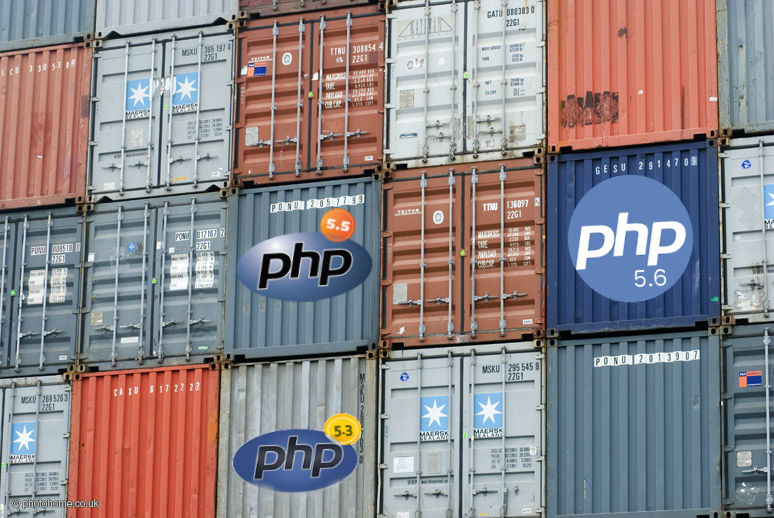
Below, I’d like to introduce you to software containers – isolated user-space instances utilized in an operating-system-level approach to virtualization. Containers separate apps from the OS and their physical infrastructure used for connecting to the network. Thus, it is possible to run multiple virtual containers on the same carnel.
Probably, you might have heard of Docker, which appeared several years ago and caused a lot of excitement among IT specialists. It is the most striking example of container software, but there are some other noteworthy solutions. I’ve described the most prominent platforms further in this blog post, but let’s start with their nature and usage.
Containers solve a bunch of problems which occur when software is moved from one computing environment to another. A staging environment, a physical machine, a developer’s computer, a data center, or a public cloud probably offer different conditions. Therefore, by using code containers, you prevent your projects from problems related to dissimilar environments. Please note that even a distinct network topology or security policies might be a reason of conflicts and limitations. But how does container software help to solve multiple problems? Continue Reading